The Ultimate Guide to Poker's Highest Hand


Intro
Poker has long been a staple in the realm of competitive card games, captivating players across generations. It is a game steeped in strategy, psychology, and sometimes, a bit of luck. At the very heart of poker lies the concept of hand rankings, with the highest hand often determining the outcome of a match. Understanding what constitutes the highest hand can be the difference between winning a pot and leaving the table empty-handed.
This article will serve as a guide to exploring the highest hand in poker. We will highlight the important facets of this critical aspect of the game, examining different variations and their nuances. Whether you’re a novice trying to get your grip on the rules or a seasoned player looking to refine your approach, the insights shared here aim to deepen your knowledge of poker's intricacies.
In this discussion, we will break down fundamental game strategies, delve into recent trends and innovations relevant to the world of poker, and provide well-rounded insights to sharpen your competitive edge. Let’s embark on this journey to elevate your game and grasp the essential elements regarding the highest hand.
Defining the Core Concept
Rich in tradition and layered with rules, poker is more than a game of chance; it demands a thorough understanding of hands and how they work within different variants, such as Texas Hold'em or Omaha. This means recognizing what constitutes a winning hand and how that can play into larger strategies.
Therefore, let’s peel back the layers and delve into what truly constitutes a hand in poker, which is foundational to excelling in any poker game.
Hierarchy of Poker Hands
Understanding the hierarchy of poker hands is essential for both mastering strategy and making informed decisions during play. This ranking system provides a clear guideline for players to evaluate their own hands in relation to their opponents'. Knowing the strengths of various hands helps in betting, bluffing, and folding at the right moments. In high-stakes games, where the competition is fierce, having a firm grasp of this hierarchy can be the difference between walking away with the pot or leaving the table empty-handed.
The Royal Flush
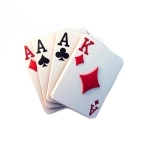
A Royal Flush is the highest possible hand in poker. It's a sequence comprising the Ace, King, Queen, Jack, and Ten of the same suit. Imagine holding this hand; the feeling is electric. Given that the likelihood of getting this hand is incredibly slim, it often induces awe at the table. Its sheer rarity gives players an almost unbeatable status, which adds a psychological edge when wielding it. A Royal Flush is shown in its full glory during showdowns, leaving opponents in disbelief.
The Straight Flush
Next in line is the Straight Flush—a hand made up of five consecutive cards of the same suit. While not as rare as a Royal Flush, it’s still quite formidable. For instance, if you hold 9, 10, Jack, Queen, and King of hearts, you have a Straight Flush. This hand carries the power to intimidate your opponents, especially if the community cards in games like Texas Hold'em are leaning towards a possible flush or straight.
Four of a Kind
Four of a Kind consists of four cards of the same rank and one unrelated card. It's often a hand that strikes fear when displayed. Let’s say you have four Queens and a random card. This hand is a strong contender, though it can be beaten by a Straight Flush or Royal Flush. In terms of play mechanics, having Four of a Kind allows you to approach your opponents either with caution or aggression, depending on how the board checks out.
Full House
A Full House features three of a kind and a pair. This hand combines the strength of both by offering consistency with three matching cards and a side pair for balance. To illustrate, having three eights and two fives forms a Full House. Its versatility in betting can put pressure on other players, perhaps making them second-guess their own strategies. Many players establish a game plan around building a strong Full House, knowing it can outplay weaker hands comfortably.
Flush
A Flush is simply five non-consecutive cards all of the same suit. Unlike the previous hands where specific sequences were important, any combination of five hearts or spades will do. It might strike you as a decent hand to work with or even rely on in crucial moments. The worry here is it can be easily outmatched by any hand that has a sequence involved, like a Straight or Full House.
Straight
A Straight consists of five consecutive cards of varying suits. For example, 5, 6, 7, 8, and 9 of different suits make a Straight. While this hand can hold its own against weaker combinations, you must be careful as it lacks the depth of stronger hands. For some players, it’s a hand they hope to improve upon with later community cards.
Three of a Kind


Three of a Kind, or Trips, is formed with three cards of the same rank and two unmatched cards. An example would be three aces along with a four and a seven. This hand can sometimes deceive opponents into thinking they’re in a stronger position than they truly are. Understanding when to capitalize on a Three of a Kind can lead to explosive pots or painful losses.
Two Pair
Two Pair is exactly what it sounds like—two different pairs alongside another unrelated card. Imagine holding two sevens, two fives, and a Jack. While it may not always dominate the betting, it can be formidable, especially against weaker hands. Timing your bets and understanding how your opponents perceive their hands can stretch the value you gain from Two Pair.
One Pair
One Pair is the most basic hand, consisting of two cards of the same rank. If you hold a pair of Kings, this is your starting point. It often requires your strategic skills to elevate the value of a One Pair against stronger hands. This hand, while not often a powerhouse, can come with situational advantages if you play your cards right—literally!
High Card
Finally, we have the High Card, which occurs when no player has a better hand. In this scenario, the highest single card played is compared. For instance, if you have an Ace and no pair, it all comes down to whether your Ace can claim the top spot against others' cards. Understanding how to play with a High Card requires a knack for reading the game and anticipating opponents' moves.
While poker is often seen as a game of chance, the strategic implications behind understanding the hierarchy of poker hands are paramount.
Grasping these hands and their order not only enhances gameplay but also enriches the overall experience of poker, cultivating a community based on respect and skill.
Variations of Poker Games
Understanding the different variations of poker games is indispensable for anyone looking to grasp the nuances of the highest poker hands. Each game comes with its own set of rules and strategies that can significantly influence how players approach forming their hands. Whether you're looking to sit at a table playing for fun or honing your skills to win money, knowing these variations can help sharpen your decision-making process.
The diversity among poker games can alter the rank of certain hands and dictate strategies, making it crucial to know what to expect. While some players might find comfort in traditional Texas Hold'em, others might revel in the complexities of Omaha or the mellow pace of Seven-Card Stud. Each variant offers something unique, which makes diving into these games not just essential, but also exciting. Let’s explore some key variations.
Texas Hold'em
Texas Hold'em is arguably the most popular variant of poker, dominating both casual home games and major tournaments. Players are dealt two private cards and combine those with five community cards to form the strongest possible five-card hand. The excitement comes from the hidden information—what cards does the opponent hold? It’s here that hand ranking takes on extra dimension, prompting players to calculate not only their own odds but also those of others based on playing styles and betting trends.
In Texas Hold'em, players must remain flexible and read the table; an understanding of the highest hands is pivotal. When to play aggressively and when to hold back can swing the outcomes dramatically. The combination of strategy and psychology makes this style of play especially appealing to different types of players.
Omaha
Omaha provides a unique twist compared to Texas Hold'em. In this variant, players receive four hole cards instead of two, but they must use exactly two of those cards to make their hand, along with three of the five community cards. This format encourages players to think in more dimensions. With more cards in play, hand combinations multiply, complicating nurmerous strategies.
Many players who start out with Texas Hold'em often gravitate toward Omaha due to its complexity. The chance of forming a strong hand increases, but so does the risk of intervention by peers with powerful combinations. Players need to have a good grasp on hand ranking and be prepared to adapt their strategies based on how others are playing.
Seven-Card Stud
Seven-Card Stud, a classic yet somewhat less common version, offers a change of pace from community card games. Here, there are no hole cards—players receive a mix of face-up and face-down cards throughout the betting rounds. This format ensures that the action is reliant heavily on memory and observational skills.
The challenge here is to keep track of what cards have been revealed while making decisions on hand construction. Players must be savvy, utilizing their knowledge of the highest ranked hands without the luxury of shared community cards. Understanding hand rankings is crucial, but so is careful observation of opponents, as their face-up cards can provide invaluable information.
Other Variants
Beyond these three main styles, there are many other poker variations that captivate players. Games like Razz, where the lowest hand wins, take a completely different approach, challenging conventional hand rankings. Then there’s Pineapple and Crazy Pineapple, where players deal with an interesting mix of strategies and combinations. Each game introduces specific challenges that can affect outcomes in unexpected ways.


Exploring these variations not only enhances one’s poker repertoire but also fosters adaptability—essential for high-level play. With the right knowledge and strategy, players can navigate these diverse worlds, positioning themselves as more formidable opponents.
In essence, whether engaging in the mainstream Texas Hold'em or exploring lesser-known games, a foundational understanding of poker variations equips players with insights vital for making informed decisions. So keep your cards close and your knowledge even closer as you dive headfirst into the intriguing landscape of poker!
Strategic Implications
When players consider chasing high hands, they must weigh several factors, including their position at the table, the stage of the game, and the tendencies of their opponents, all of which play pivotal roles in strategy development. Ignoring these factors could leave a player with no better than a pocket full of regret.
When to Play for High Hands
Knowing when to seek high hands is more nuanced than simply observing the cards dealt. A poker player's position at the table can shift the entire game’s dynamics. For instance, a player acting later in a round can glean valuable information from earlier bets, allowing for calculated risks. High hands are generally more rewarding but come with their own set of challenges and potential pitfalls.
Here are some scenarios to consider:
- Early Rounds: When starting a hand, it’s wise to play conservatively unless a strong hand appears. This prevents players from overextending their resources too soon.
- Mid Game: As players gather data on their opponents’ betting patterns, this is an opportune time to evaluate whether to chase a good hand or fold, based on the context.
- Late Game: Here, high hands can turn a game around. Players often need to assess whether opponents are bluffing or if it is strategic to gamble everything on a potentially strong hand.
In essence, the decision to pursue a high hand hinges on situational awareness and adaptability.
Bluffing and its Role
Bluffing is almost an art form in poker, one that hinges on timing, context, and psychological insight. Successfully faking strength can lead to more wins than opting for high hands all the time. But what makes bluffing a crucial aspect of poker strategy?
- Psychological Warfare: Players who master bluffing create a persona at the table. They can make opponents doubt their own holdings, leading to mistakes. Being unpredictable often leads to advantageous outcomes.
- Bluff and High Hands: Even when holding a strong hand, incorporating bluffing can enhance your strategy. For instance, when a player has a flush but believes their opponent holds a higher hand, dropping a bluff may provoke a fold.
- Reading Body Language: Experienced players often pick up on subtle cues, giving them insight into whether an opponent is bluffing or genuinely confident in their hand. Recognizing these cues can inform one’s decision to either call or fold.
The line between winning and losing can sometimes be blurred, and mastering the tactical implications of both high hands and bluffing can solidify a player’s standing at the table.
In the world of poker, both high hands and bluffing play distinct yet interconnected roles. The key lies in understanding your playing environment and adapting strategies as necessary.
Psychological Aspects of Play
The psychological facets of poker represent a vital, yet often overlooked, element of the game. To truly excel, players need to develop a strong understanding of human behavior and the mental dynamics at play around the table. This understanding stretches beyond mere rules and hand rankings, inching into the realm of strategy that relies heavily on emotional intelligence.
Players must be attuned to the subtle shifts in their opponents’ demeanor. Who seems nervous as they bet? Which player appears overly confident with every call? Recognizing these indicators can give players a substantial edge, potentially turning games in their favor. The benefits are palpable; by understanding body language and facial expressions, you can gauge whether a player is bluffing or holding a strong hand.
Reading Opponents
Reading opponents is akin to piecing together a puzzle. The more attention you pay, the clearer the picture can become. Each facial twitch, every slight hesitation, and the way a player handles their chips can reveal a wealth of information. Here are some tips to hone your skills:
- Observe Betting Patterns: Notice how often and how much opponents bet when they have strong hands compared to weaker ones. This can inform your decisions significantly.
- Facial Expressions: A relaxed face can indicate confidence. In contrast, a furrowed brow or clenched jaws often suggest stress or uncertainty.
- Physical Tells: Players might show signs of anxiety, such as fidgeting or avoiding eye contact when they’re unsure or bluffing. Keep an eye out for these behaviors!
Remember to also consider how your own actions could give away information. A player who often checks when they feel weak or raises when strong may become predictable over time.
"The real skill in poker isn't simply about the cards you hold; it's about understanding the hearts and minds of those you're playing against."


Managing Expectations
Managing expectations in poker is crucial, and it requires a delicate balance of optimism and realism. You can’t win every hand, just as you can't control the cards you’re dealt. Accepting this fact lays the foundation for a healthier mindset, essential for long-term success. Here’s how:
- Set Realistic Goals: Instead of focusing solely on winning, strive for making optimal plays, regardless of the outcome. This mindset curbs frustration and enhances your skills over time.
- Understand Variance: Poker is a game of probabilities. There will be ups and downs. Recognize that bad beats are part of the experience and should not derail your confidence or strategy.
- Stay Composed: Emotions can cloud judgment, especially after a loss. Take short breaks if necessary to regain focus. An even-tempered approach boosts decision-making capacity.
This mellow mindset fosters resilience and helps to shield you from the emotional rollercoaster that often accompanies competitive play. Ultimately, being methodical and patient can lead to improved decision-making, both during and after the game.
Cultural Significance
The cultural significance of poker extends beyond the realm of cards, weaving itself into the very fabric of societal interactions and reflections of human behavior. Poker isn’t just a game; it’s a microcosm of life, showcasing themes like risk, strategy, psychology, and competition. Understanding this cultural tapestry makes the nuances of poker hands, including the highest hand, more palpable and enriching.
Poker has evolved from simple roots into a phenomenon that captures the imagination. Historically, its journey reveals changing social norms and attitudes toward gambling, leisure, and even economic power. In many ways, the game mirrors the complexities of cultural identity across different societies. For instance, in regions where poker is embraced, players exhibit not just skill but also an array of cultural strategies.
Poker's Evolution Through the Ages
From its origins in the 19th century, poker was initially a sailor's game, played in smoky taverns. Over time, it has transcended this humble beginning. With the advent of global travel and communication, variations of poker adapted and morphed, giving rise to divergent styles like Texas Hold'em and Omaha.
With each poker boom, particularly during the late 20th to early 21st century, the game's appeal grew exponentially. Popular tournaments like the World Series of Poker began to draw hundreds of thousands of participants and spectators worldwide, transforming the game into an esteemed sport. This transformation isn’t merely because of prize money; it speaks volumes about community building and shared experiences among enthusiasts.
Today, the game's evolution also reflects trends in technology. With online poker platforms gaining traction, poker can now be played anywhere, and this accessibility democratizes the game. Many young players learn the ropes through virtual means, which impacts their understanding of hand rankings and strategies, including the highest hand.
Poker in Popular Culture
Poker has embedded itself deeply in popular culture, illustrating its significance not only as entertainment but also as a vehicle for storytelling. Films like 'Rounders' and 'Casino Royale' portrayed poker in riveting ways, showcasing the high stakes and mental acumen involved in the game. These depictions often exaggerate aspects of poker yet underline the cultural relevance it holds. The aesthetic of poker chips and cards finds its way into music, art, and literature, signifying a sense of risk and reward that resonates with audiences.
Furthermore, reality television has levered poker’s growing popularity, with shows dedicated to competitions and player stories. These media portrayals not only create awareness but also highlight the personalities behind the game, making poker feel accessible to the masses.
The cultural symbolism tied to poker also speaks to risk management and decision making, traits valued in many professional fields. For many, the highest hand isn’t merely about achieving a winning combination; it’s about the journey to that point—the ups and downs, the strategic planning, and ultimately, the lessons learned.
In summary, the cultural importance of poker transcends gameplay. It represents an evolving narrative of competition, community, and identity. As players delve into understanding the highest hand, they engage not just with cards but the rich cultural heritage that poker embodies, enriching their experience and appreciation of the game.
Culmination
In wrapping up our exploration of poker's highest hand, it's essential to take a moment to recognize what this journey has illuminated. Understanding the supreme hand in poker isn't just about knowing which combination beats which; it’s a passport into the psyche of the game. This article has delved into various layers of the highest hand and the subtleties that can make or break a player at the table. The core takeaway is that while the grandeur of a royal flush captures admiration and awe, the strategic implications stretch far beyond mere luck.
Whether you're a newcomer learning the ropes or a seasoned player looking to fine-tune your skills, grasping hand rankings is foundational. It influences the decisions you make, the bluffs you throw, and the calculated risks you take. Too often, players overlook the mental game that accompanies the mathematics of poker. Knowledge is power and applying that knowledge effectively can tip the scales in your favor.
"In poker, as in life, understanding the nuances is what separates the casual players from the true strategists."
Recap of Key Points
- Hand Rankings: Familiarity with hands from high card to royal flush can guide decisions.
- Game Variations: Different poker games hold unique significance to hand rankings, adapting strategies based on rules.
- Psychological Game: Reading opponents and managing your own expectations play vital roles in exploiting high hands.
- Historical Significance: Appreciation of poker's cultural impact adds depth to the game's allure.
Future Trends in Poker
As poker continues to evolve, certain trends are already manifesting and shaping the future landscape of the game:
- Digital Advancements: Online poker platforms gain popularity, leading to new strategies tailored for digital play, emphasizing adaptability.
- Artificial Intelligence: The rise of AI in poker has been a game-changer, offering tools that assist players in decision-making and strategy formulation. This trend may push traditional players to enhance their skills to compete.
- Increased Popularity: The cultural significance of poker appears to be resilient, with a strong following abetted by streaming services and televised tournaments.
- Focus on Education: Resources catering to learning poker, from books to online tutorials, are on the rise, helping both novices and advanced players refine their craft.
Engaging with these trends allows players to remain at the forefront of strategic play, ensuring they’re not left in the dust as the game transforms around them.